




Beyond Hard Seltzer: Why Retailers Are Turning to Non-Alcoholic Functional Alternatives
As consumer priorities shift toward mindful consumption and functional wellness, the beverage aisle is undergoing a quiet revolution — and the most forward-thinking retailers are already ahead of the curve
For a long time, hard seltzer was the undisputed darling of the beverage industry. Brands like White Claw and Truly rewrote the rules of the alcohol category, luring health-conscious drinkers with promises of low calories and cleaner ingredients. Retailers stocked deep, promotional activity was aggressive, and category growth seemed limitless.
Then came the correction. Hard seltzer sales plateaued as novelty wore off, competition became brutal, and a growing segment of consumers began questioning whether 'healthier alcohol' was a meaningful distinction at all. The sober-curious movement, has accelerated into a mainstream consumer behavior, fundamentally changing what buyers are looking for on-shelf. Today, an estimated one in three adults actively moderates their alcohol consumption, driven by health goals, mental wellness, and a broader cultural shift toward intentional living. These shoppers are not disappearing from the beverage aisle. They are looking for something better.
A $50 Billion Market With Room to Run
The opportunity in functional beverages is not speculative — it is well-documented and growing. The US functional beverage market is currently valued at $50 billion and is forecast to reach $62 billion by 2027, representing a compound annual growth rate of 4.5% from 2022 to 2027. Within that market, energy drinks lead the category at $16.0 billion — roughly one-third of the entire market — growing at an estimated 3.2% CAGR through 2027. Sports drinks trail at $12.2 billion but are accelerating faster, at an estimated 5.6% CAGR, signaling strong and sustained consumer appetite for functional, performance-oriented beverages.
But the growth story in this market is not just about volume. It is about positioning. Consumers are no longer satisfied with beverages that merely hydrate or provide a quick energy spike. They want drinks that actively work for them — managing stress, improving focus, supporting recovery, or simply providing a credible social alternative to alcohol. This is the white space that non-alcoholic functional beverages are filling, and it is expanding rapidly.
Three Forces Driving the Functional Shift
The momentum behind non-alcoholic functional beverages is being driven by three converging consumer forces that show no sign of reversing. The first is the broader wellness economy, which has made health and functionality primary purchase drivers across virtually every consumer category. In beverages, this translates into growing demand for products that support mental clarity, physical recovery, and emotional balance — without artificial ingredients, excessive sugar, or alcohol.
The second force is the rise of the sober-curious consumer. This is not a niche audience. American consumers are actively reducing or eliminating alcohol from their lives, and they are doing so not out of abstinence, but out of preference. They want the ritual and relaxation of a social drink without the downsides. Hard seltzer tried to serve this audience by making alcohol seem healthier. But the next wave of products is doing something more honest: removing the alcohol altogether and replacing it with botanicals and functional ingredients that actually deliver a benefit.
The third force is botanical and plant-based innovation. Ingredients like kava, ashwagandha, L-theanine, and kratom have centuries of traditional use behind them and are now being formulated into accessible, shelf-ready beverage formats. This intersection of ancient plant knowledge and modern product development is creating one of the most compelling new sub-categories in retail. And the window to establish early positioning is open right now.
Kratom Seltzers and Functional Infusions: The Category Retailers Can't Ignore
Kratom — derived from the Mitragyna speciosa plant, a tropical tree native to Southeast Asia — has moved well beyond specialty wellness shops and into modern beverage formats designed for mainstream retail. Today's kratom products bear little resemblance to the powders and capsules of a decade ago. They arrive in sleek, shelf-ready seltzer cans, functional energy shots, and non-alcoholic mixer formats with broad consumer appeal. For buyers evaluating this category, the timing is favorable: consumer awareness is growing, trial is being driven by approachable formats, and the competitive set remains thin enough that early movers can establish meaningful category authority.
Kratom seltzers and botanical infusions offer retailers something hard seltzer never truly could: a product story built entirely around wellness, intentionality, and functional benefit rather than a compromise on alcohol. That is a stronger proposition for a consumer base that is increasingly demanding more from every purchase.
Club13: A Category Partner Built for Retail
For retailers and distributors looking to enter or expand in the functional botanical beverage space, Club13 represents a category-leading option backed by more than 25 years of operational history. Founded in 1999, Club13 has spent over two decades developing a portfolio of premium kratom and botanical products designed for curious, wellness-oriented consumers. Their approach is grounded in three principles: transparency, innovation, and retail-readiness — qualities that matter enormously when bringing a newer category into a retail environment.
Quality and safety are foundational to the Club13 model. Every batch is independently third-party tested for mitragynine levels, mold, yeast, and pathogens, with full transparency on active alkaloid content. For buyers who need to stand behind the products they stock, this level of rigor is not just reassuring — it is essential.
Club13 also addresses the inventory risk concern that often slows category adoption. Their 100% product swap satisfaction guarantee means that if a SKU does not move, Club13 takes it back with no hassle and no loss to the retailer. That zero-risk entry model removes the single biggest barrier to trying a new category and makes it straightforward for buyers to experiment with placement and assortment.
On the retail execution side, Club13 provides everything needed to drive in-store trial and conversion: resealable packaging, display cases, coolers, and branded LED signage designed to create visibility and draw consumer attention. Their formulations also go beyond kratom alone, incorporating synergistic ingredients like ashwagandha, L-theanine, and milk thistle that deepen the functional positioning and broaden the consumer appeal of each product.
The Club13 Product Range
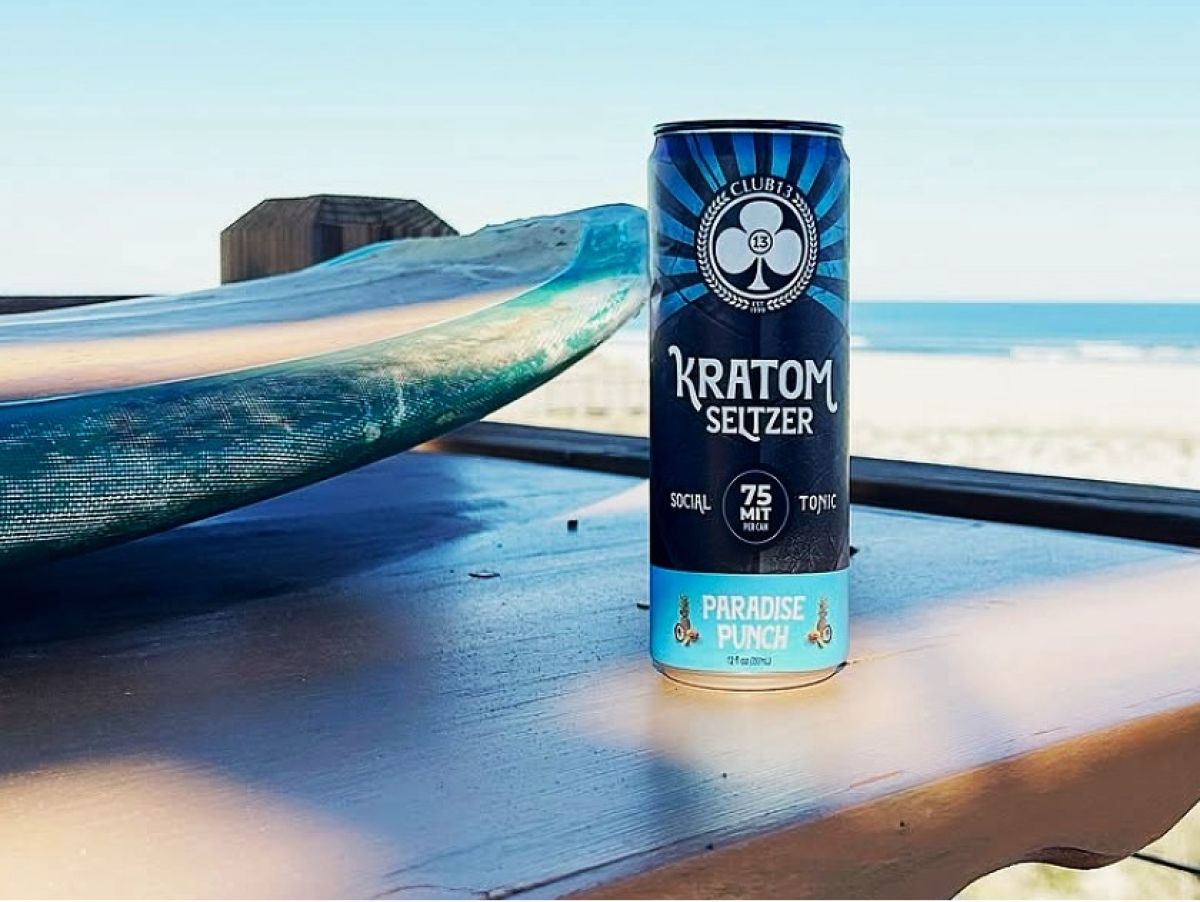
Club13's portfolio is designed to serve consumers across a range of moods, occasions, and familiarity levels with kratom and botanical beverages. Their 35 MIT Seltzers offer a light, bubbly, and approachable entry point for first-time consumers, while the 75 MIT Seltzers step up in potency for experienced users seeking a more pronounced sense of calm and relaxation. Both are crafted for the same social occasions that hard seltzer once owned — but with a wellness story behind them.
For consumers who want energy without the crash, Club13's All Natural Energy Shot combines kratom extract with natural caffeine and B-vitamins for a clean, steady boost — positioning it directly against the high-growth energy shot segment in a way that stands out on shelf. On the non-alcoholic infusion side, KavaMosa delivers relaxation through kava root in a format that is completely sugar-free and calorie-free, while Kava Joy offers a bold, citrus-forward alcohol-free mixer crafted with premium kava extract for consumers who want a flavorful, vibrant drinking experience without alcohol. Rounding out the portfolio, Mit Squeeze provides a precision liquid kratom extract in a travel-ready format for consumers who want portability and consistency on the go.
Taken together, the Club13 range gives retailers a full-spectrum functional botanical assortment capable of serving the sober-curious consumer, the wellness seeker, the social drinker, and the energy-focused consumer — all under one trusted brand.
The Bottom Line for Buyers
The functional beverage category is not a passing trend. It is the direction of travel for a significant and growing segment of the US consumer population, and the numbers back that up clearly. Retailers who wait for the category to become crowded before entering will cede first-mover advantage to competitors who recognized the shift earlier.
Non-alcoholic functional alternatives represent a genuine and largely untapped white space in most retail environments today. They serve the sober-curious consumer who currently has limited options. They serve the wellness-oriented shopper who wants more from their beverage. And they serve retailers looking for margin-positive, differentiated SKUs in an increasingly commoditized aisle. Club13's combination of product innovation, retail execution support, third-party quality assurance, and a risk-free entry model makes them an ideal category partner for retailers and distributors ready to get ahead of this shift.
The hard seltzer moment is largely behind us. The functional botanical moment is just beginning — and the retailers who move now will own it.
Header image sourced from Club 13 (Instagram).